

Building a marketing content agent that works like a mini version of me
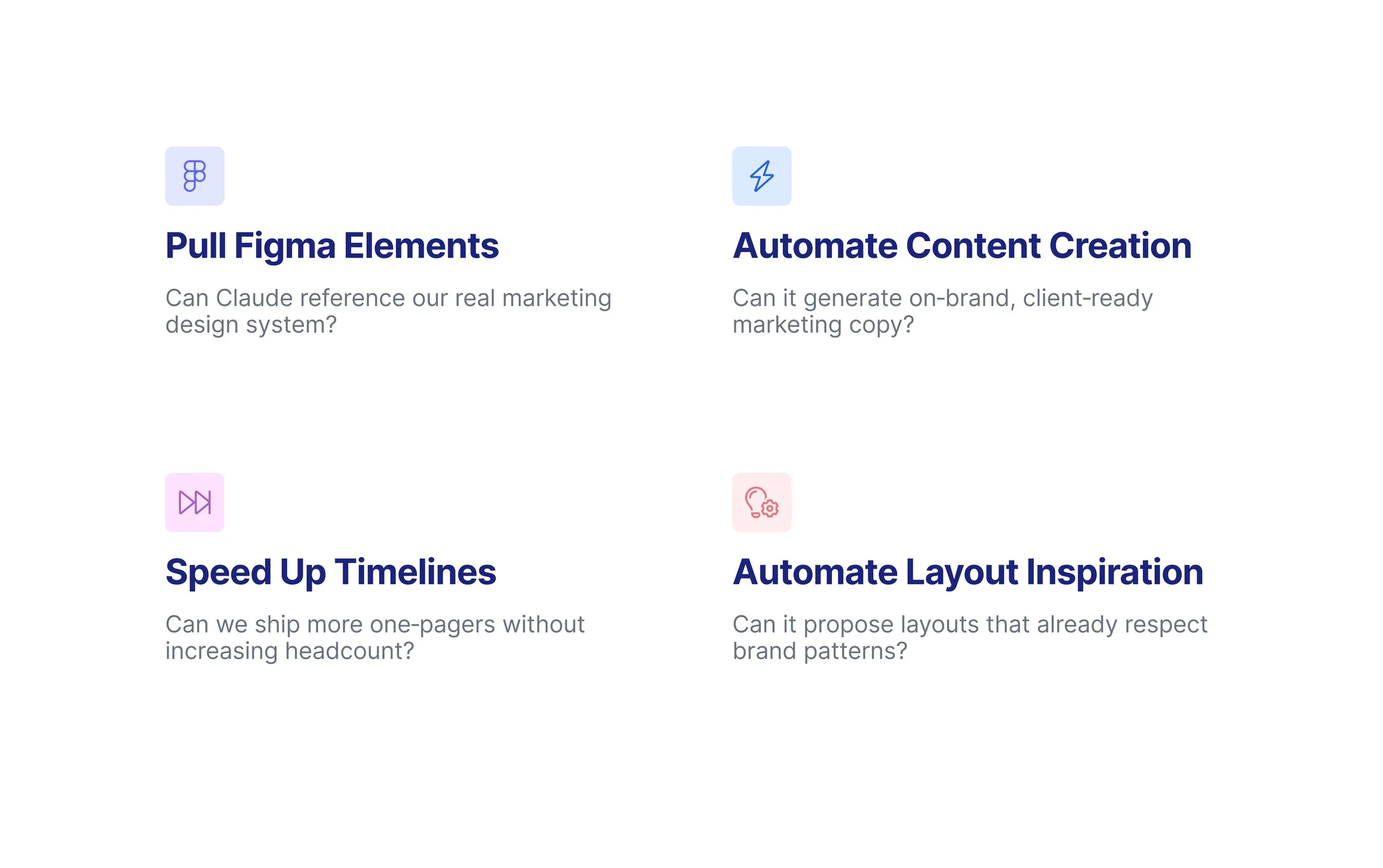
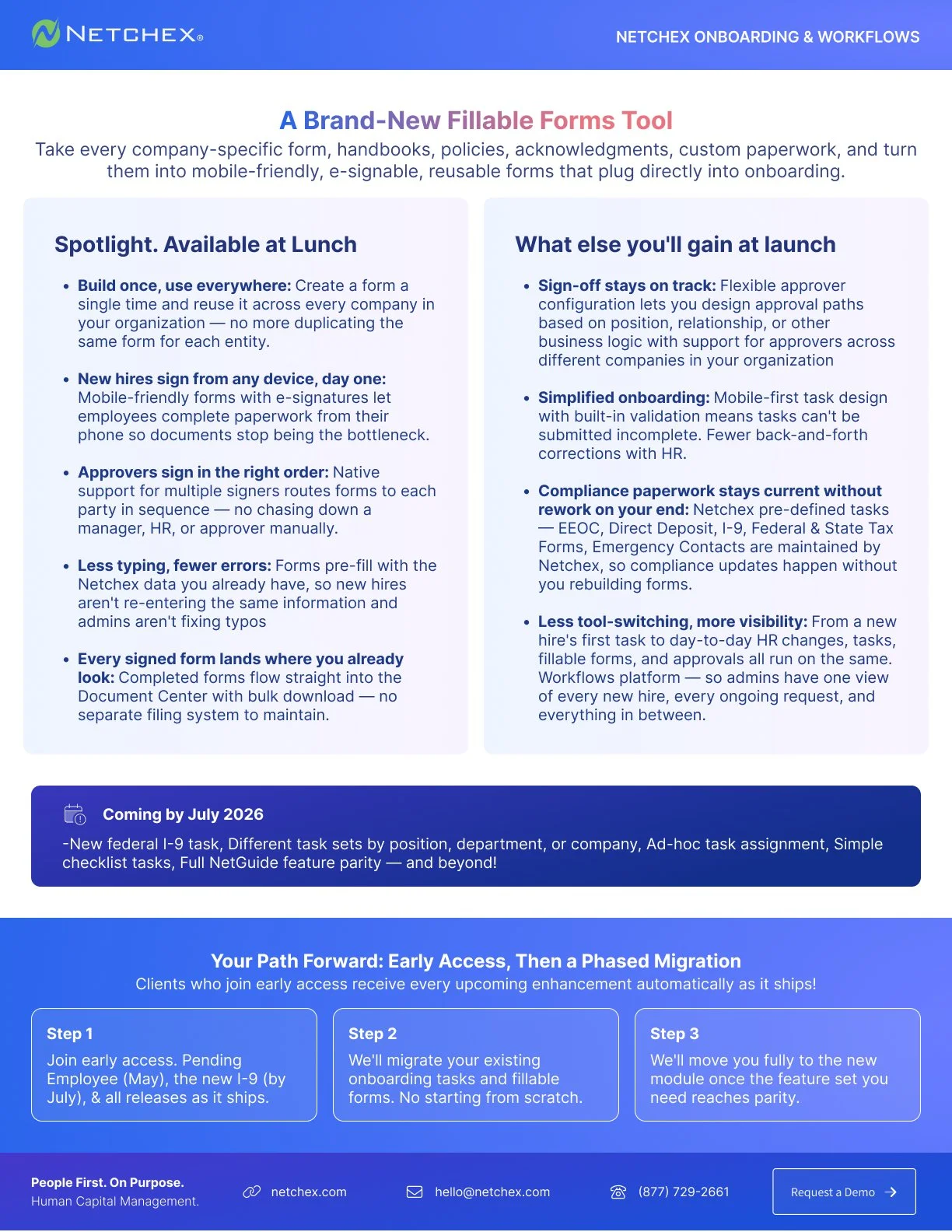
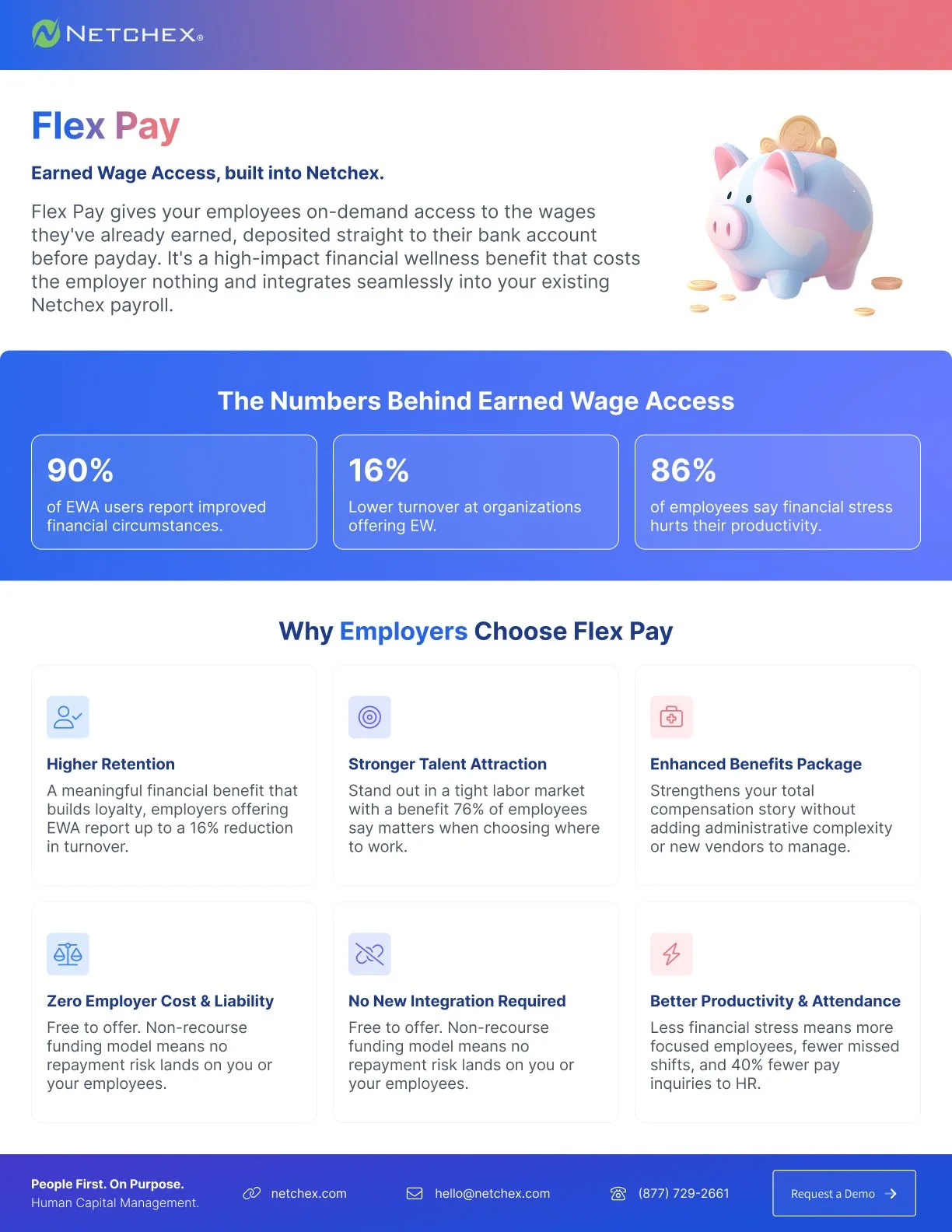
Our team was drowning in one-pager requests. I built an autonomous Claude agent that handles the first 80%. Pulling live copy, selecting real Figma components, and assembling on-brand layouts — so I'm refining, not starting from scratch. Output doubled without adding headcount.
My Initial Hypothesis
〰️
My role Sole builder
〰️
Context Build week project.
〰️
Tools Claude · Figma · Midjourney
〰️
Result 4 → 8–10 per week
〰️ My role Sole builder 〰️ Context Build week project. 〰️ Tools Claude · Figma · Midjourney 〰️ Result 4 → 8–10 per week
01 — The problem
Our team handles a high volume of one-pager requests from marketing.
Each one following similar patterns but still requiring a full spin-up: research, copy, layout, brand checks. The work was repetitive but too detail-sensitive to cut corners on. It was eating time we didn't have.
Each one-pager took hours. I was building around four a week at full quality. The pipeline kept growing and adding headcount wasn't on the table.
The reframe
"The goal isn't complete automation — it's faster starts and fewer cycles. If I could handle the first 80%, I could double output without touching brand quality."

02 — My role & ownership
I designed, built, and iterated on this entirely on my own during build week.
There was no brief, no PM, no precedent. I defined the problem, chose the tools, shaped the agent's logic through conversation, and connected it to the design system I'd already built.
-
Didn't write one big prompt — let Claude interview me to shape the agent logic around the real workflow
-
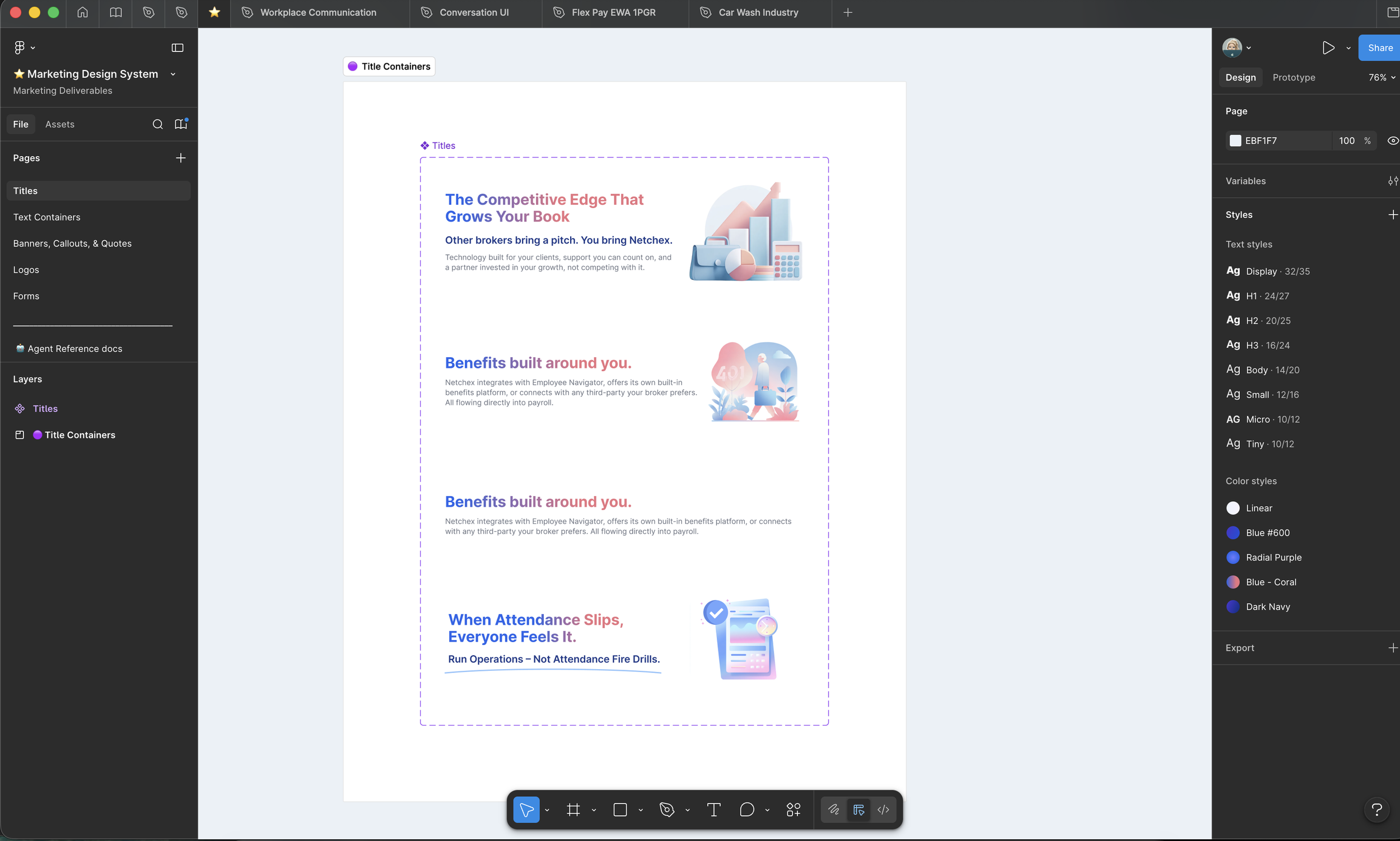
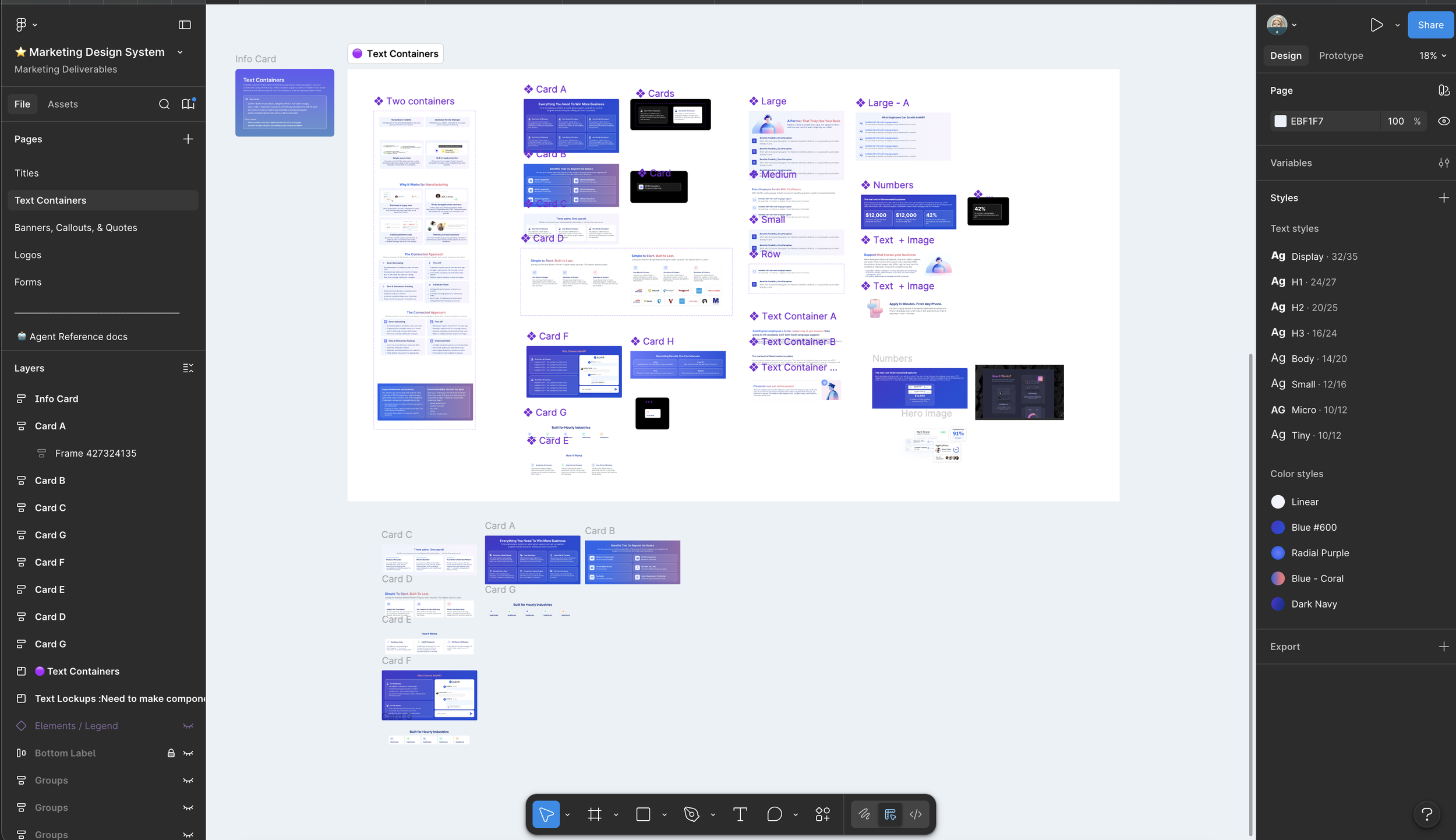
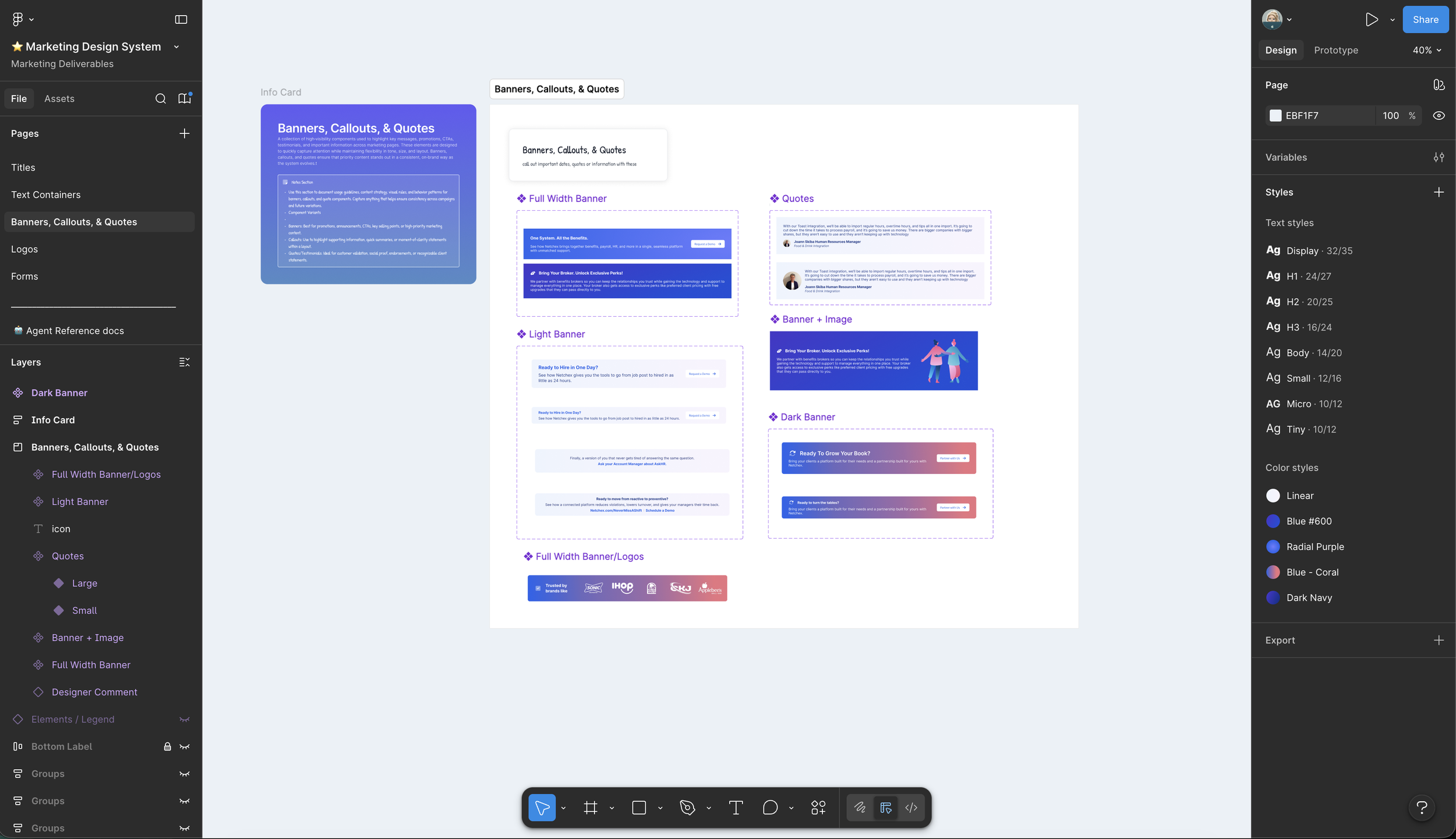
Wired it to netchex.com for live copy extraction, our Figma design system for real components, and Midjourney for on-brand image generation
-
Designed 4 approval gates so nothing moves forward without my sign-off — speed without losing oversight
-
Refined the prompt, naming conventions, and design system docs after each run — the agent got smarter every time
The key insight
"The agent is only as powerful as the system it stands on. Every component I add, every naming improvement I make — it makes the agent smarter on the next build."

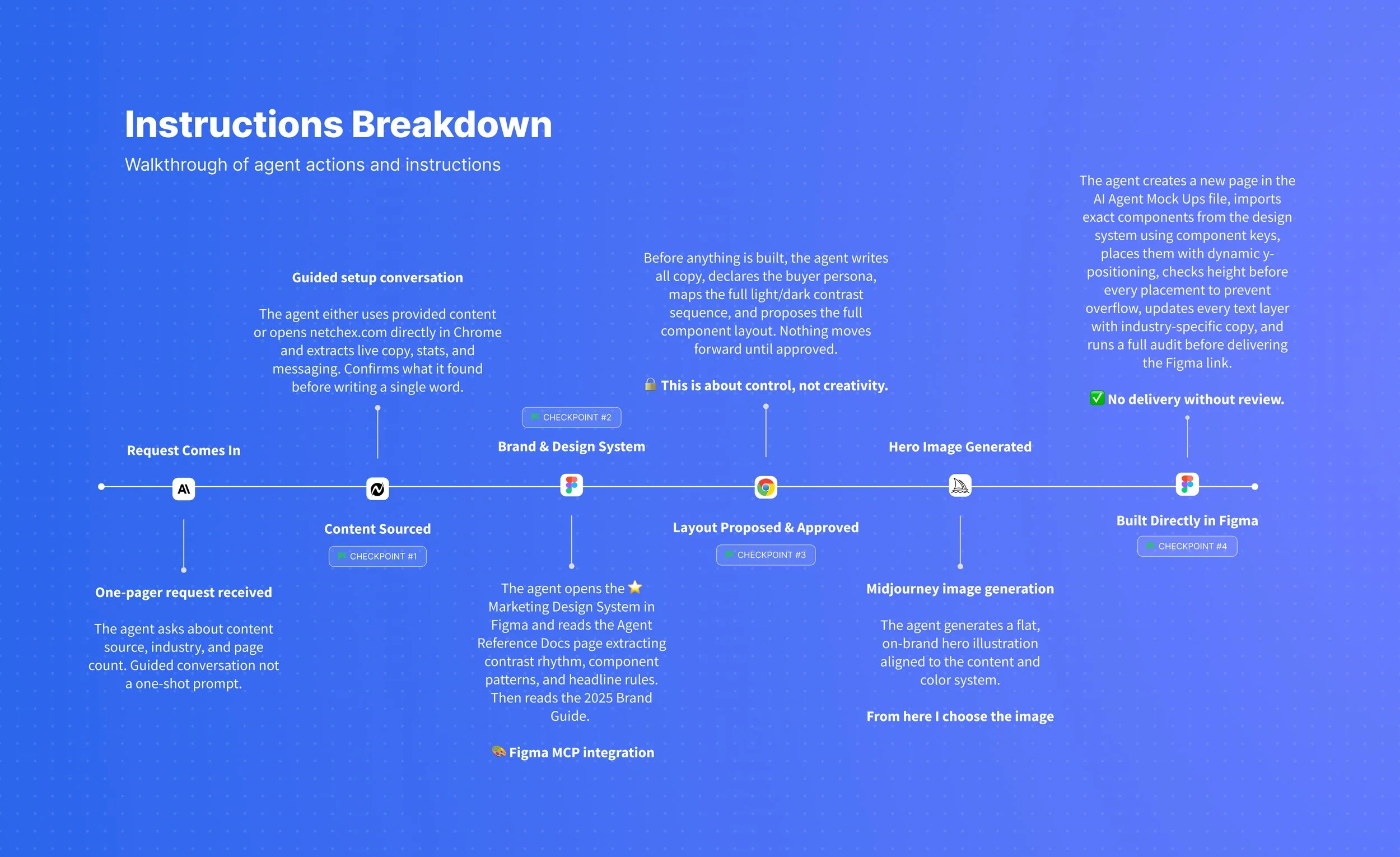
The agent runs in six stages
each building on the last. The most important design decision was where to put the humans — I built four hard checkpoints so every key decision stays mine, not the agent's.
-
Content sourcing — agent opens netchex.com in Chrome, extracts live copy, and confirms what it found before writing a single word
-
Brand + design system — reads the Figma Marketing Design System, agent reference docs, and 2025 brand guide to extract contrast rhythm and component rules
-
Layout approval — writes all copy, declares buyer persona, maps the full contrast sequence, and proposes the layout. Nothing moves until I approve
-
Figma build + audit — imports real components using exact keys, places with dynamic positioning, runs a full copy audit. No delivery without review
04 — Solution
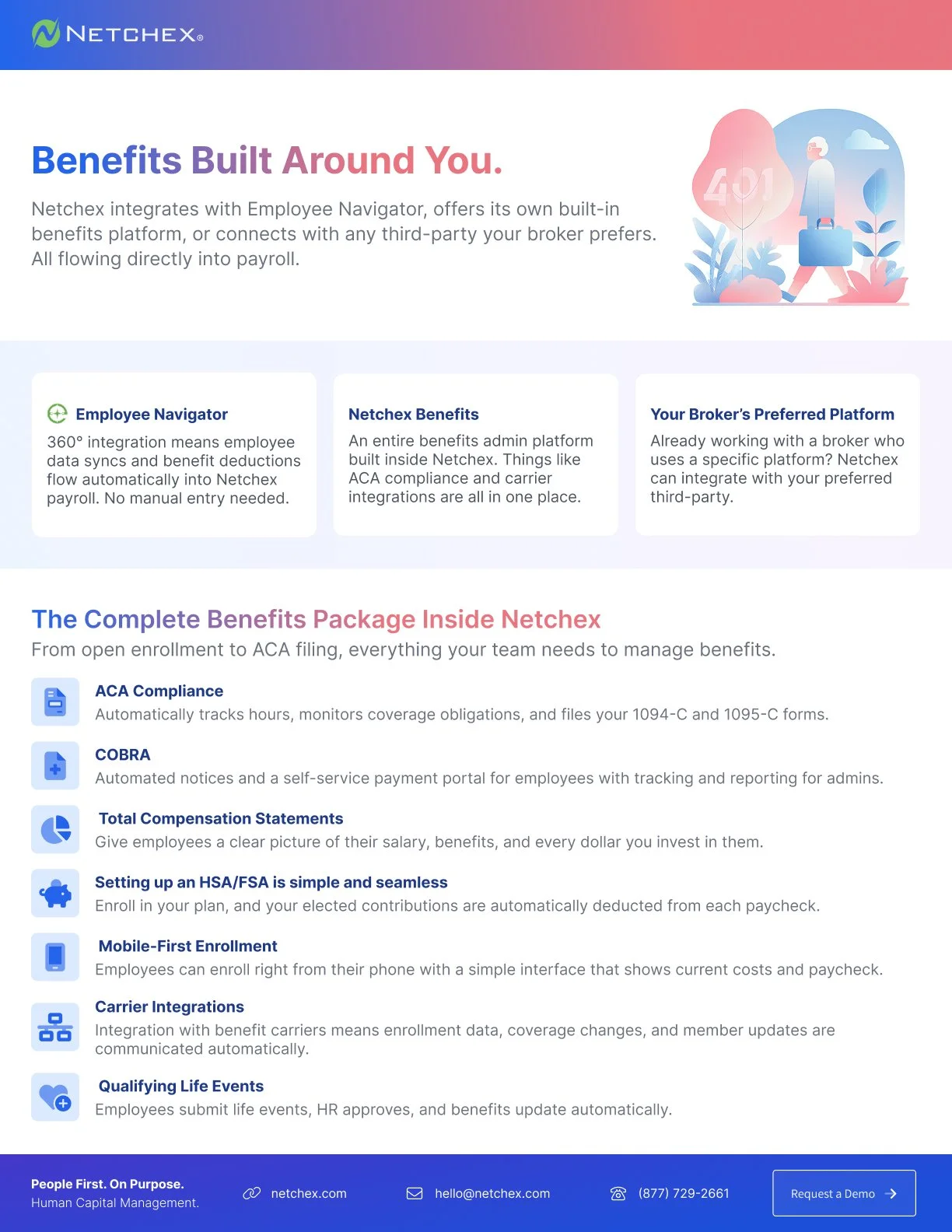
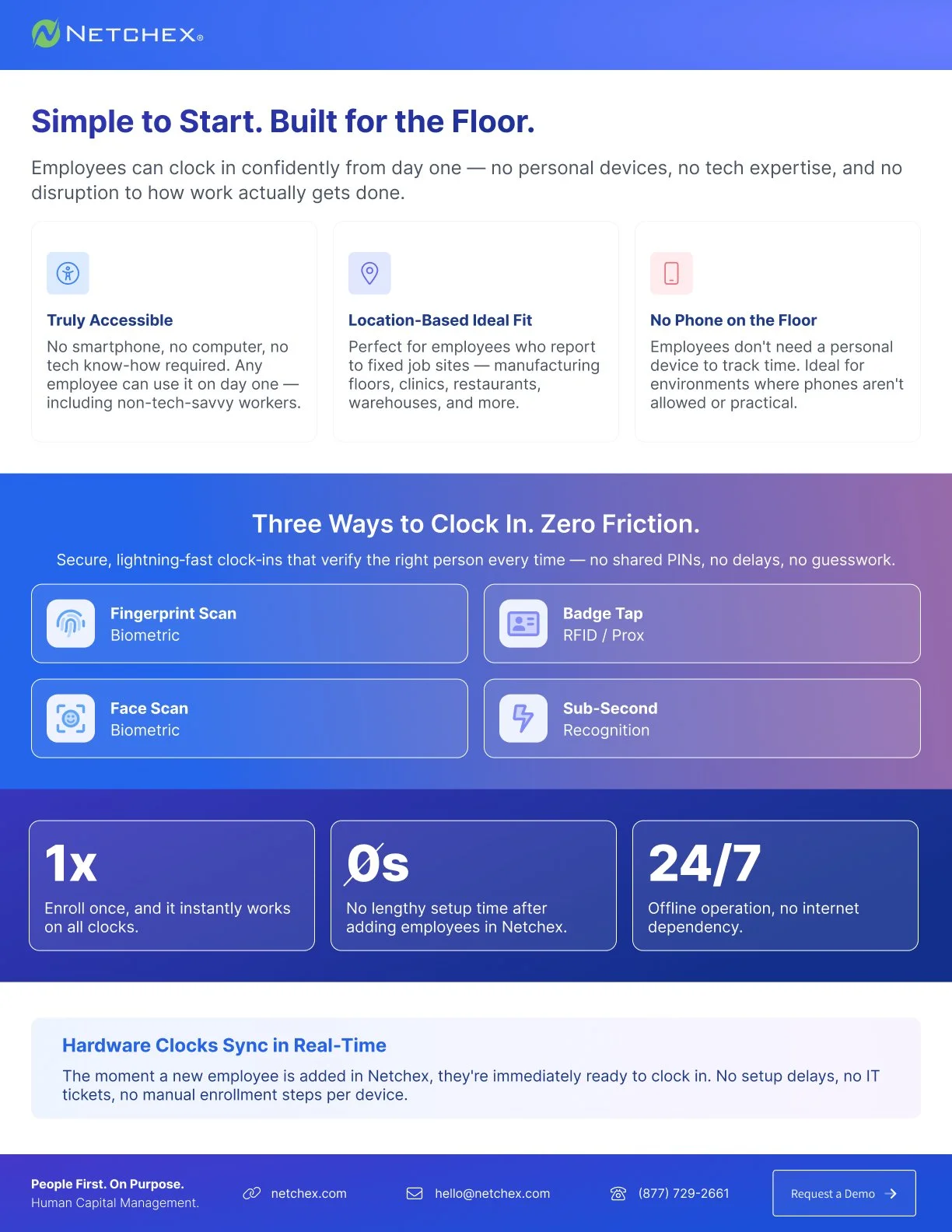
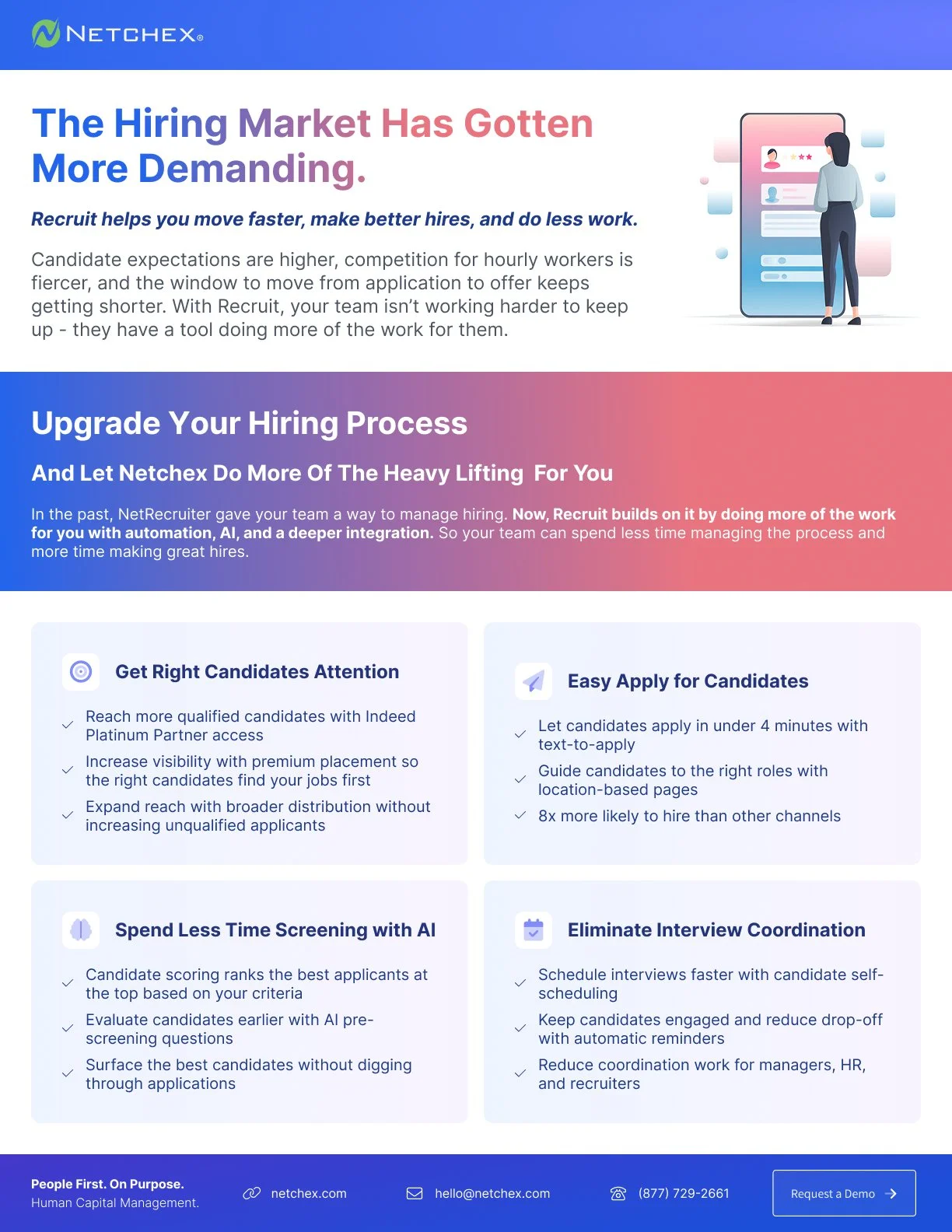
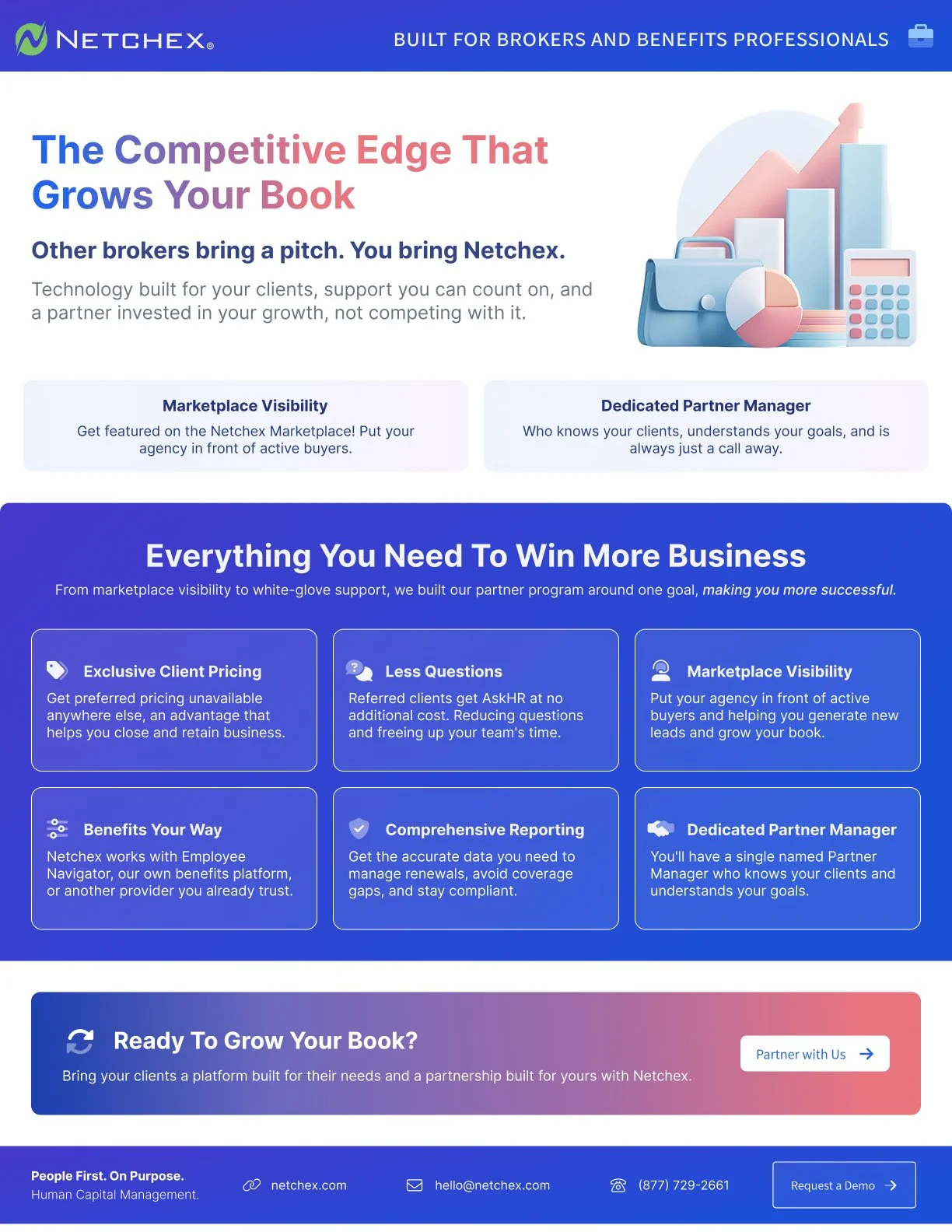
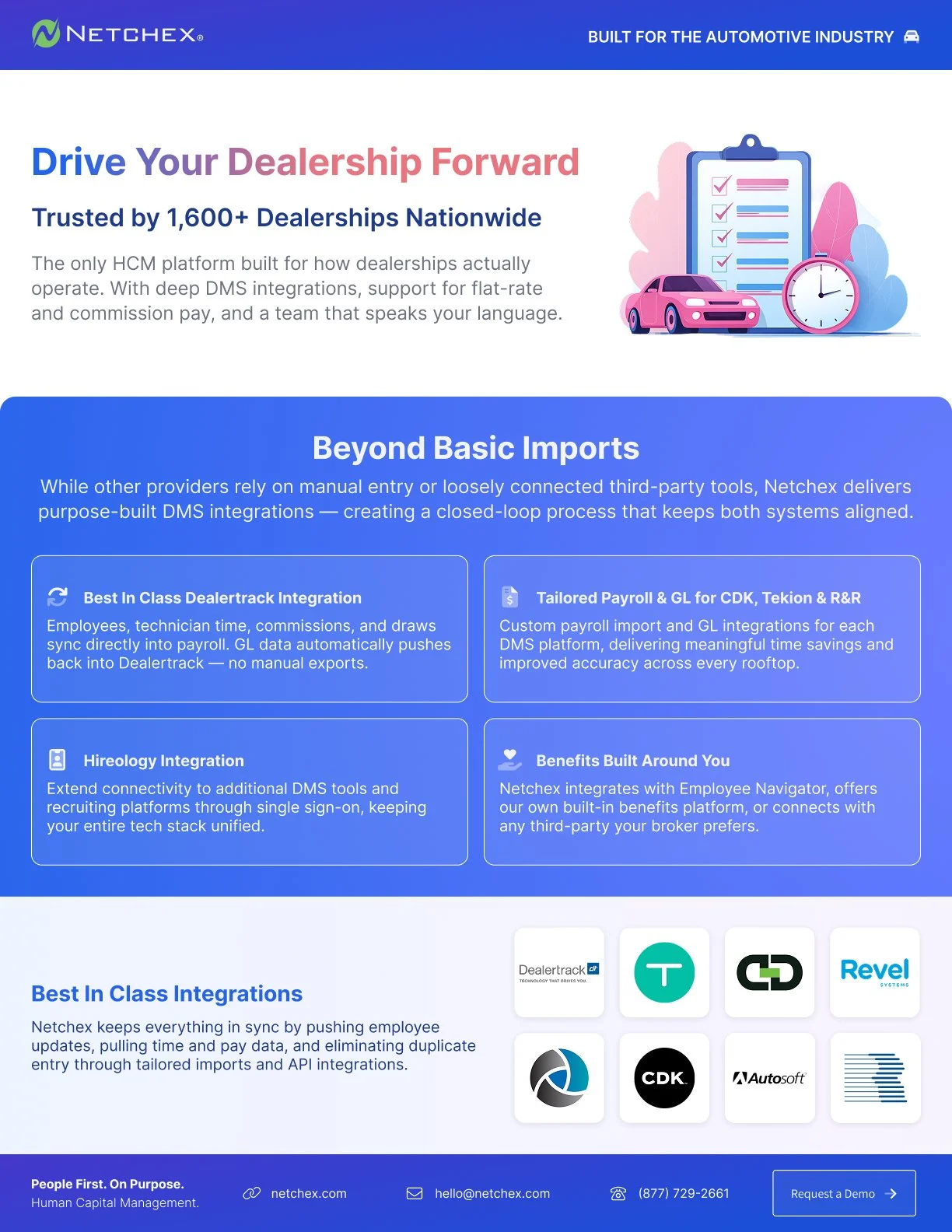
A fully autonomous marketing agent that acts as a mini version of me. It handles research, copy, layout, image generation, and brand compliance — then delivers a Figma file ready for my review. Every output still goes through leadership before shipping.
Live copy from netchex.com
Real Figma components via MCP
Industry-specific copy
Midjourney hero images
Contrast rhythm enforced
Full copy audit pre-delivery
05 — Impact
Leadership stays in the loop without added friction — everything still goes through Summer and Rebecca before shipping. The agent increased volume without increasing their review load.
What I'd do differently
I'd bring stakeholders into the prompt refinement process earlier — specifically the people who approve final outputs. The gap between what the agent produces and what ships closes faster when approvers help train its voice, not just review the results.
2x
Output ~ 4 to 8–10 one-pagers per week
0
New headcount needed to hit higher volume
80%
Of the build is handled before I touch it
Live
Shipping real assets, not a prototype or POC